
Psoriasis is a chronic autoimmune skin condition that causes thick, scaly, and sometimes itchy patches on the skin. While lifelong, psoriasis can be effectively managed with the right treatment plan and regular dermatology care. At Atomic Dermatology, our team provides personalized strategies to help reduce flare-ups and improve skin comfort.
Psoriasis occurs when the immune system accelerates the skin-cell production cycle, leading to rapid buildup on the skin’s surface. Patches may appear red, dry, itchy, or scaly, and they can vary in severity from mild to widespread.
Commonly affected areas include:
Elbows
Knees
Scalp
Lower back
Hands and feet
Genitals
Nail surfaces
If a skin condition is causing discomfort, changing in appearance, or not improving with home care, it’s time to see a dermatology provider.
Psoriasis can be a lifelong condition, but with the right dermatology care, symptoms can often be managed effectively. Our team will evaluate your skin, discuss triggers, and develop a treatment plan tailored to your specific needs and lifestyle.

Yes — psoriasis presents in several forms, including:
Plaque Psoriasis – The most common type; raised red patches with silvery scales.
Guttate Psoriasis – Small, drop-shaped lesions often triggered by illness.
Inverse Psoriasis – Smooth, red patches in skin folds.
Pustular Psoriasis – Blister-like bumps filled with pus (non-infectious).
Erythrodermic Psoriasis – A rare but severe form affecting large areas of the body.
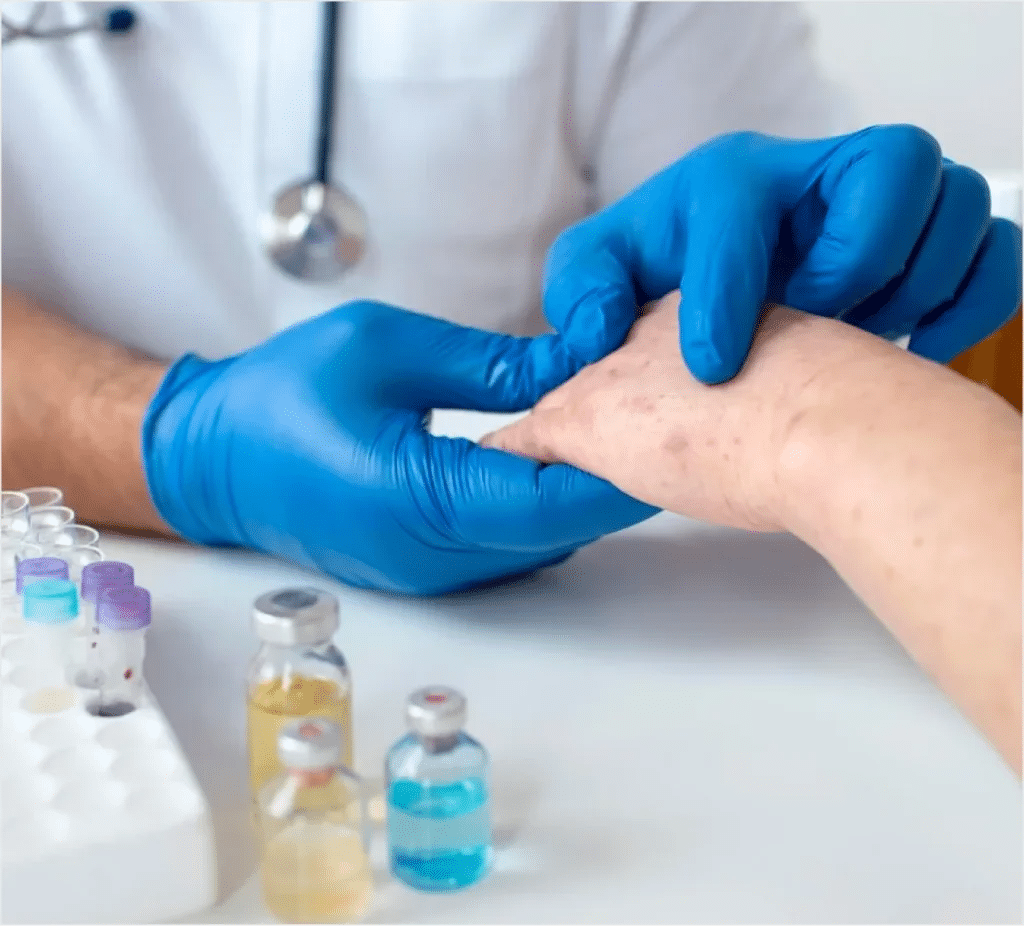
While there is no cure, psoriasis can be successfully managed with a combination of medical and lifestyle approaches.
Your provider may recommend:
Prescription topical treatments
Oral or injectable medications
Light therapy
Gentle skincare routines
Identifying and reducing triggers (stress, illness, skin injury, certain medications)
Our goal is to help you experience fewer flare-ups, less discomfort, and healthier skin over time.
Yes, psoriasis is a chronic condition, but symptoms can often be managed effectively with treatment.
Treatment may include topical medications, oral therapies, or advanced dermatologic treatments depending on severity.
While flare-ups can occur, identifying triggers and following a personalized treatment plan can help reduce symptoms.
Yes. Dermatology care is essential for proper diagnosis and long-term management.
Psoriasis can improve significantly with the right care. We’re here to help you manage symptoms and feel more comfortable in your skin.